


QUICK HITTERS:
In the parlance of Gen Z, Labor Day is a ‘slept-on’ holiday, so I’m using the entire newsletter this week to pay homage to it. First, a podcast recommendation: Revolutions, by Mike Duncan. I am currently listening to season 10, which is all about the Russian Revolution. Full disclosure: this is hardcore history nerd sh*t. But there are 12 seasons of it, so he must be doing something right.
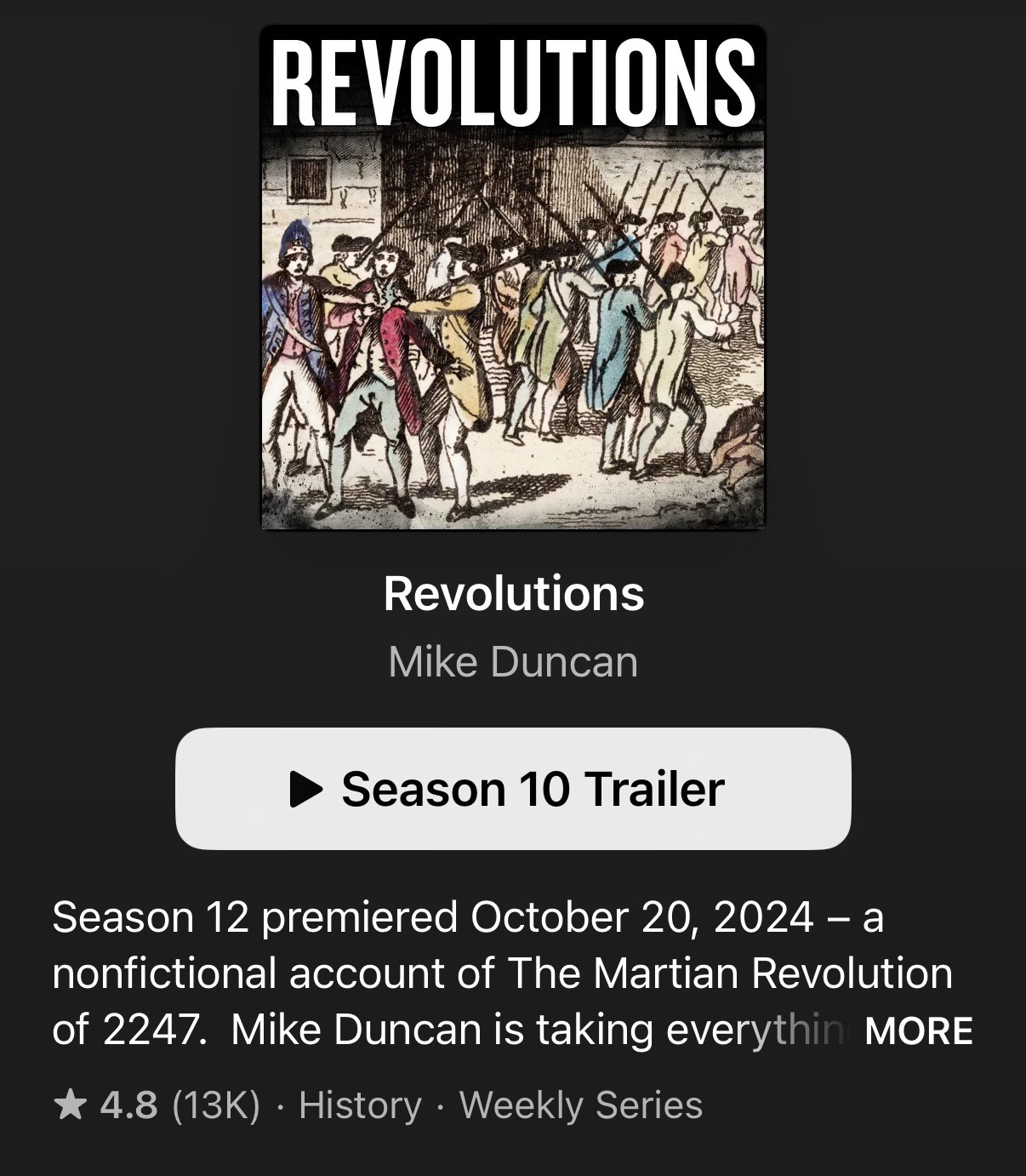
Hey look! 13,000 people rated this podcast on Apple. Did you know you could do that? I did! Go do it for our SilentPunt podcast, ya filthy animals!!! This week’s book recommendation is The Communist Manifesto, by Karl Marx and Friedrich Engels. First of all, don’t fret, I’m not turning all commie on you. However, if you want to understand the history of labor in the industrialized world, I think this is an essential read. Also, most people aren’t aware that at the time of the Russian Revolution, there was a relatively robust Communist Party in America. That is, until a certain senator from a certain state (🧀) put the kibosh on it. (There were other factors as well.)
Best part of this book rec? It’s free at your local library.

My copy of this book is particularly old and musty, so Maverick’s beagle nose was working overtime during this week’s photoshoot. Reminder: If you’d like to listen to this post, maybe in your car or on a walk, all you have to do is click on the ▶️ button at the top right (online or in the app….can’t do it in the email). I do this all the time, and it is pretty slick.



GOING DEEP:
Labor Day: Celebratory Event or Anti-Communist Bulwark?
Up until a few years ago I never had Labor Day off as an adult. Working as a college football coach it was just another Monday. Most years, it was the first week of the regular season. Training camp had ended, and we were in full-on game plan mode.
So, not only did I not participate in whatever holiday goings on were going on, I also never really thought about the meaning behind the holiday. Having read some books on labor issues at the dawn of the industrial revolution, I figured it had something to do with that.
🔴 ⚪️ 🔵 🇺🇸 🔴 ⚪️ 🔵
Earlier this week I did a little research, and my suspicions were confirmed. In short, terrible labor conditions in the late 1800s led to lots of strikes. Some of which were put down violently by our government, which often sided with corporations1. The first large-scale strike was the Great Railroad Strike of 1877. This nationwide strike was quelled with force, and about 100 workers were killed in the process.
Labor strife was not unique to the US at the time. There were similar issues all over the globe. This led to the rise of the ideas of communism and socialism. Interestingly, this week’s book recommendation, The Communist Manifesto, was written in 1848 and predates much of this strife. Marx and Engels could clearly see trouble brewing with the Industrial Revolution, which was already half a century or so into its development.
For what it’s worth, while I found the book interesting when I read it years ago, I remember it striking me as naive. Like, these guys were just kind of putting this BS out there, never thinking anyone would actually implement it. Which, some might argue, nobody really ever did. The two major communist revolutions (USSR & China) that emerged in the next century were quickly co-opted by one power-hungry group or another.
Marx and Engels’ brand of communism devolved quickly into dictatorship and despotism.
One of the cool things (or diabolical, depending on your point of view) about the American experiment is how fluid our government can be. There are lots of grey areas, areas that the Constitution doesn’t explicitly codify. Lately, this has been disconcerting, with the polarization of our two political parties causing what seems to be a seesaw effect on the direction the country is going.
I’ve written about (and discussed on the podcast) the current administration’s attempts to use this fluidity in our governmental structure to meet their own ends. It is these same grey areas that allowed our government to pivot in response to the labor issues of the late 19th and early 20th centuries. Essentially staving off a nascent communist movement here in the US.
The first “Labor Day” parade took place in New York City in 1882 and was organized by a labor union. The parade idea caught on and over the next few years spread to other cities. In 1887 Oregon was the first state to make Labor Day a holiday, and by 1894 over twenty other states had followed suit.
Then, in 1894, there was another significant and violent strike, this time in Chicago. The Pullman Palace Car Company, supported by the American Railway Union, went on strike. That led to a massive railroad strike across the nation in solidarity.
Roughly thirty Pullman employees were killed by federal troops in an effort to break the strike.
Shortly after this incident, Congress passed the law formalizing Labor Day as a federal holiday. While this was a deft maneuver by the federal government to ease labor tensions, it was only intended to maintain peace. Not to actually empower labor.
Thus, why Labor Day is in September. By the time the US formalized the holiday, several other countries had already established their own labor holiday. It was called May Day and took place on May 1 (it is still observed). The federal government didn’t want the US Labor Day to be associated with May Day, most likely because of its connections to communist and socialist movements abroad.
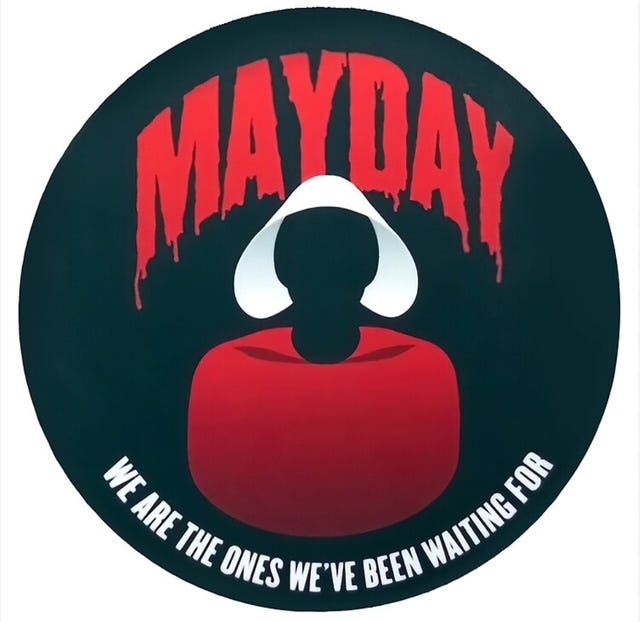
And that is where things come full circle here at SilentPunt. If you’ve been here long enough, you know I loved the show The Handmaid’s Tale. In it, the resistance group2 is named Mayday.
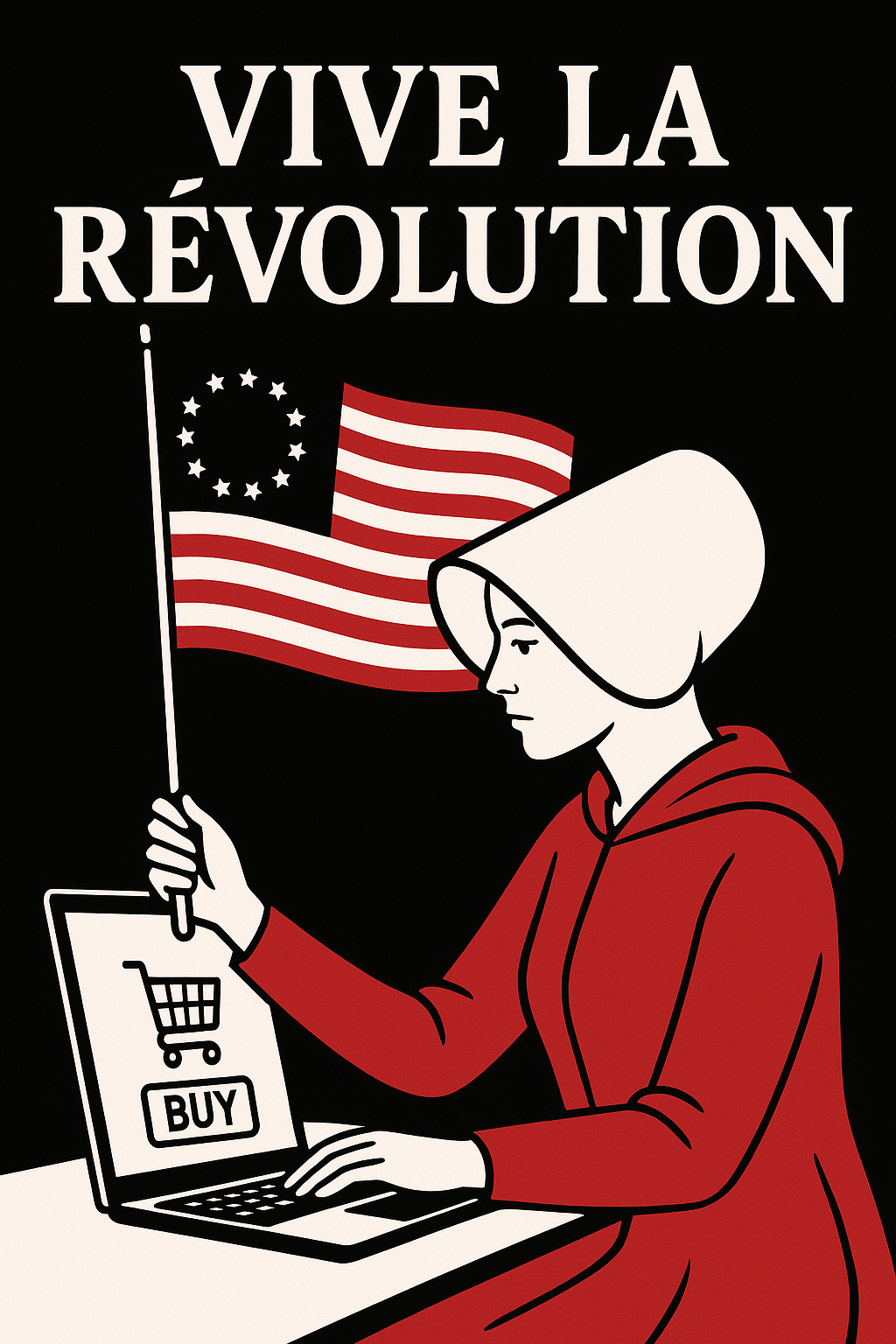
I don’t know if our country is ready quite yet for another round of worker revolts or not. My guess would be no. People like to complain about the economy. The cost of housing is too high, gas is a rip-off, and college tuition is out of control, people say.
Then they go right back to watching The Real Housewives on 65-inch flat screens, while at the same time scrolling on their $1,000 phones, as they await their $40 McDonald’s combo meal to be Door Dashed to them.
And the people that should be revolting? Amazon employees without medical coverage, public educators in Wisconsin who had their union busted, migrant workers that pick our food, and that same Door Dasher that delivered the combo meal? They’ve all been marginalized to the point that they don’t believe their voice matters.
They, and we, buy the big lie that Democrats and Republicans tell us: that it is the other side’s fault.
“The (insert opposition party here) are literally ruining the country.”
I call bullshit.
And the next time you hear someone whining about the other side, I implore you to call bullshit as well.
We are not Republicans.
We are not Democrats.
We are Americans.
🔴 ⚪️ 🔵
Question for the comments:
What say you on the state of labor in America?
🇺🇸
🇺🇸
🇺🇸
Do you have a friend who would like this? Click below to share it with them:
Sound familiar?
Who happen to be what is left of the US after a violent Christian overthrow of the government establishes a new nation, in place of the US.
Somehow, inexplicably, union rank-in-file continues to vote against its own interests. The parties are not the same on unionization.
Mayday is an apt name for that group.