


QUICK HITTERS:
In honor of the Milwaukee Brewers starting the postseason tomorrow, this week’s book recommendation is Home of the Braves: The Battle for Baseball in Milwaukee, by Patrick W. Steele. Dr. Steele was a professor at my last coaching stop, so I was excited when I found this book last year. It delves deeply into the brief history of the MLB’s Braves’ time in Milwaukee. I was reminded of much of it this past week as I put together the GOING DEEP section.
(Video of the book this week instead of a pic…because you get to see how demanding our Maverick is. And if you turn the volume up, you can also hear a sassy teenager in the background.)
Super excited to announce that next week we’ll be having our first interview on the SilentPunt Podcast. I have a particular interest in people who have made career transitions, and we’ll be talking to a former NFL player turned entrepreneur. Reminder, you can find this past week’s episode on YouTube, Apple, Spotify, or HERE on Substack.
Book update: Made some good progress this past week, but still a long, long way to go. Send some positive vibes my way if you can. On that note, every subscriber I get, every heart I get, every referral I get, (🎵every breath you take, every move you make 🎵….just kidding), increases the chances of an agent or publisher taking a chance on me. Any assistance you can provide is appreciated. 👊🏼
IF YOU ARE AN EVEN BETTER PERSON, AND YOU WANNA SHARE THIS WITH A GOOD BUDDY, DO SO HERE 👇🏼.
GOING DEEP:
Am I the only one who gets transfixed by historical markers? (The world whispers back, “yes Henny.”)
Last weekend, I accompanied my wife and daughter on another college cheer visit. This time to the University of Wisconsin. Located in Madison, this idyllic setting is mostly ruined by the constant assault on your eyes by the color red. Any of my Ithaca friends will understand how gross this picture is:
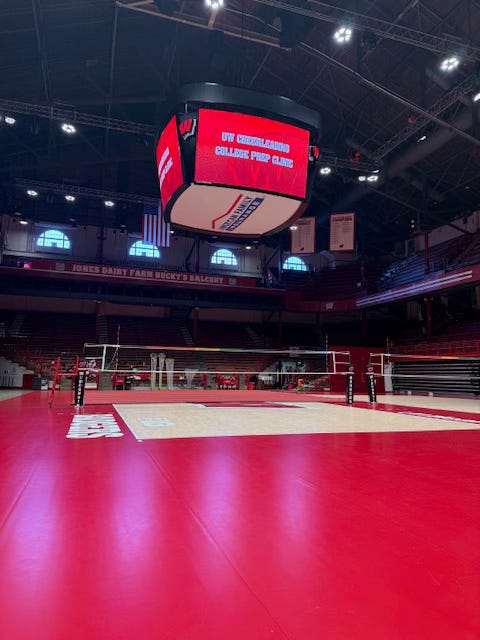
In an effort to stave off my all but certain vomiting while ensconced in such a vile environment, I decided to take a stroll. Attached to the fieldhouse we were in was Camp Randall Stadium, home of the mighty Badger football team.
While walking around the facility, I came upon a park dedicated to the site. I have a condition where I cannot walk past a historical marker sign without stopping to read it. My circle of people know this, and that they can keep walking, I’ll catch up eventually.
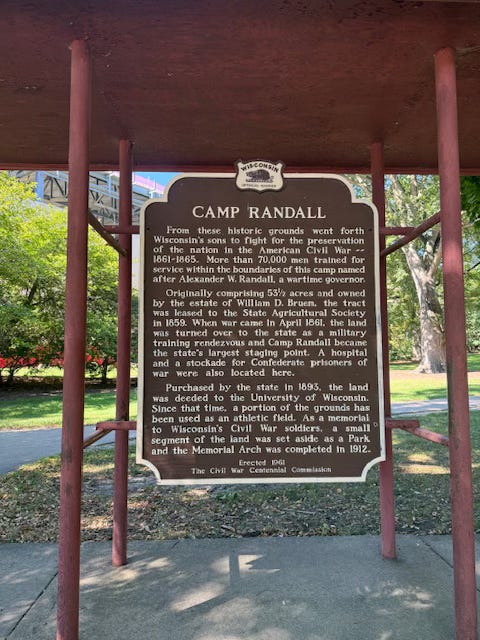
From these historic grounds went forth Wisconsin’s sons to fight for the preservation of the nation in the American Civil War, 1861-1865. More than 70,000 men trained for service within the boundaries of this camp named after Alexander W. Randall, a wartime governor.
Originally comprising 53½ acres and owned by the estate of William D. Bruen, the tract was leased to the State Agricultural Society in 1858. When war came in April 1861, the land was turned over to the state as a military training rendezvous and Camp Randall became the state’s largest staging point. A hospital and a stockade for Confederate prisoners of war were also located here.
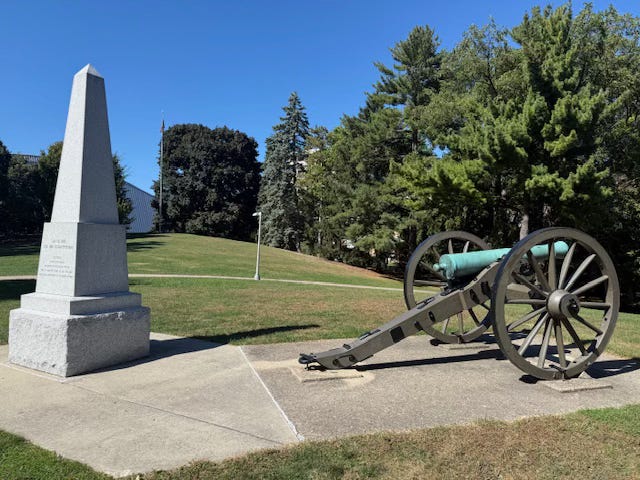
Purchased by the state in 1893, the land was deeded to the University of Wisconsin. Since that time, a portion of the grounds has been used as an athletic field. As a memorial to Wisconsin’s Civil War soldiers, a small segment of the land was set aside as a Park and the Memorial Arch was completed in 1912.
A day after our visit to UW I filmed the weekly SilentPunt Podcast with my buddy Travis. In it, we touched upon a NFL franchise that had moved hometowns several times. It got me thinking of my own hometown team. No, not that hometown team (Go Birds)….the Milwaukee Brewers.
⚾︎ ⚾︎ ⚾︎ ⚾︎ ⚾︎ ⚾︎ ⚾︎ ⚾︎ ⚾︎ ⚾︎ ⚾︎ ⚾︎ ⚾︎ ⚾︎ ⚾︎ ⚾︎
The first location for professional baseball in Milwaukee was Borchert Field. It was home to the minor league Milwaukee franchise (also called the Brewers) as well as a Negro League team for a very brief time.
Earlier this week, I had to abort what had been a Herculian effort on my part to locate the historical marker for Borchert Field. After about 30 minutes driving around a north Milwaukee community that more resembled Gaza than the former home of a ballpark, I found the sign.
In typical heroic fashion I abandoned my idea of taking a picture of the sign and remained in my car. Self-preservation and all. The pics below are courtesy of the interwebs…
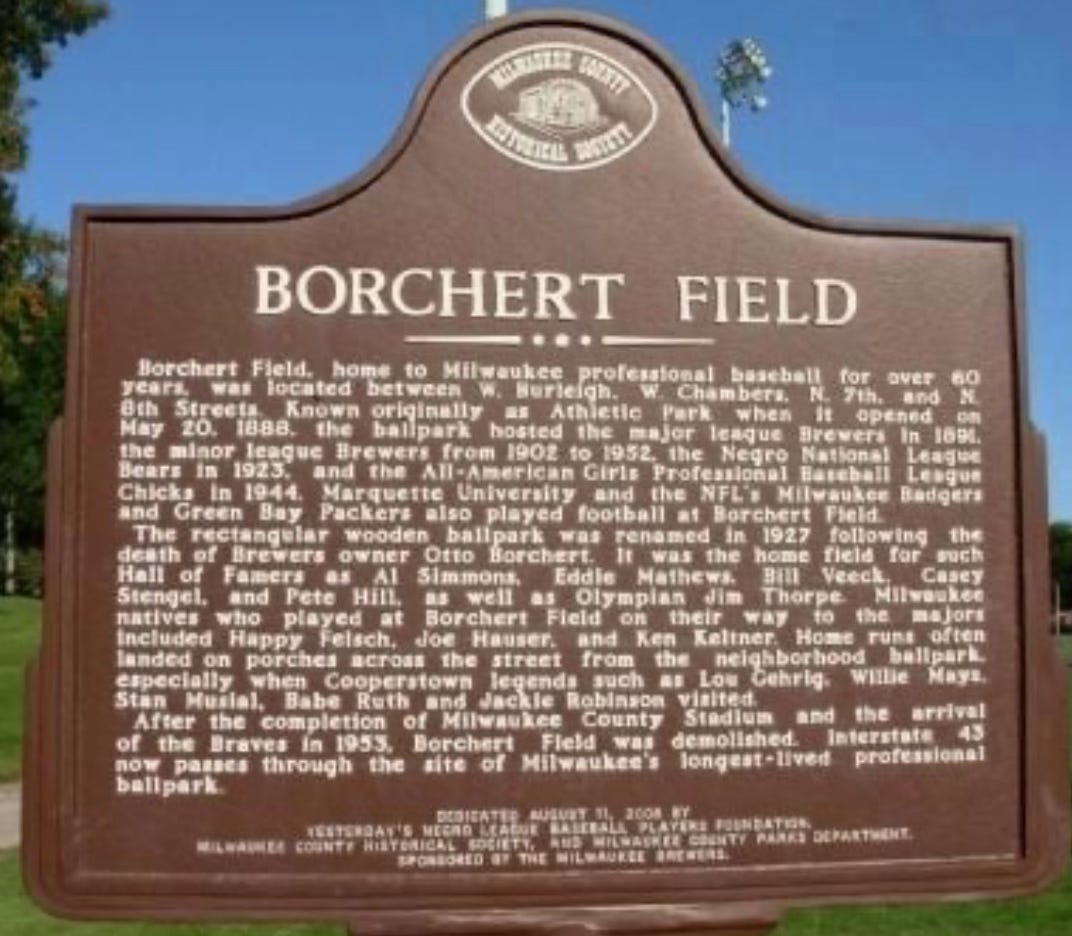
Borchert Field, home to Milwaukee professional baseball for over 60 years, was located between W. Burleigh, W. Chambers, N. 7th, and N. 8th streets. Known originally as Athletic Park when it opened on May 20, 1888, the ballpark hosted the major league Brewers in 1891, the minor league Brewers from 1902 to 1952, the Negro National League Bears in 1923, and the All-American Girls Professional Baseball League Chicks in 1944. Marquette University and the NFL’s Milwaukee Badgers and Green Bay Packers also played football at Borchert Field.
The rectangular wooden ballpark was renamed in 1927 following the death of Brewers owner Otto Borchert. It was the home field for such Hall of Famers as Al Simmons, Eddie Mathews, Bill Veeck, Casey Stengel, and Pete Hill, as well as Olympian Jim Thorpe. Milwaukee natives who played at Borchert Field on their way to the majors included Happy Felsch, Joe Hauser, and Ken Keltner. Home runs often landed on porches across the street from the neighborhood ballpark, especially when Cooperstown legends such as Lou Gehrig, Willie Mays, Stan Musial, Babe Ruth, and Jackie Robinson visited.
After the completion of Milwaukee County Stadium and the arrival of the Braves in 1953, Borchert Field was demolished. Interstate 43 now passes through the site of Milwaukee’s longest-lived professional ballpark.
Did you catch the part about the ‘Milwaukee Chicks?’


….and on the other side of the marker…
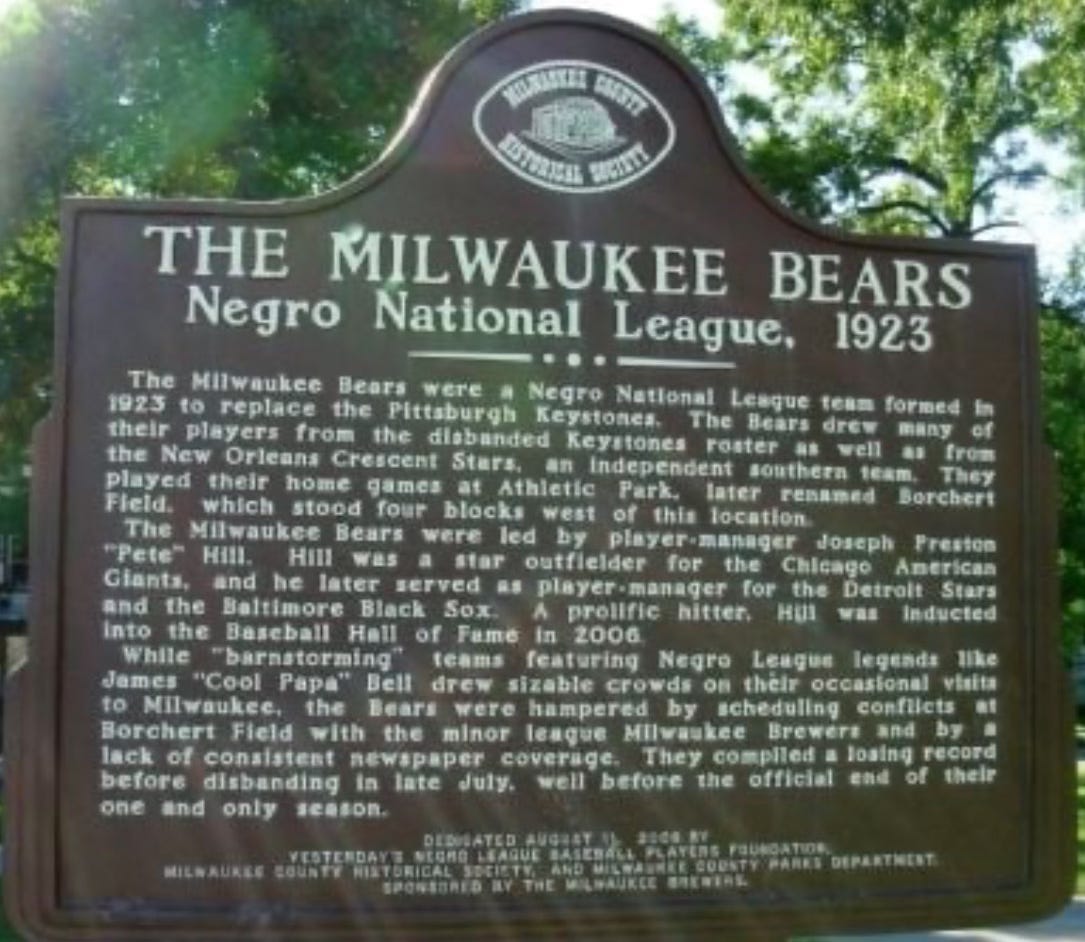
The Milwaukee Bears were a Negro National League team formed in 1923 to replace the Pittsburgh Keystones. The Bears drew many of their players from the disbanded Keystones roster as well as from the New Orleans Crescent Stars, an independent southern team. They played their home games at Athletic Park, later renamed Borchert Field, which stood four blocks from this location.
The Milwaukee Bears were led by player-manager Joseph Preston “Pete” Hill. Hill was a star outfielder for the Chicago American Giants, and he later served as a player-manager for the Detroit Stars and the Baltimore Black Sox. A prolific hitter, Hill was inducted in the Baseball Hall of Fame in 2006.
While “barnstorming” teams featuring Negro League legends like James “Cool Papa” Bell drew sizable crowds on their occasional visits to Milwaukee, the Bears were hampered by scheduling conflicts at Borchert Field with the minor league Milwaukee Brewers and by a lack of consistnet newspaper coverage. They compiled a losing record before disbanding in late July, well before the official end of their one and only season.
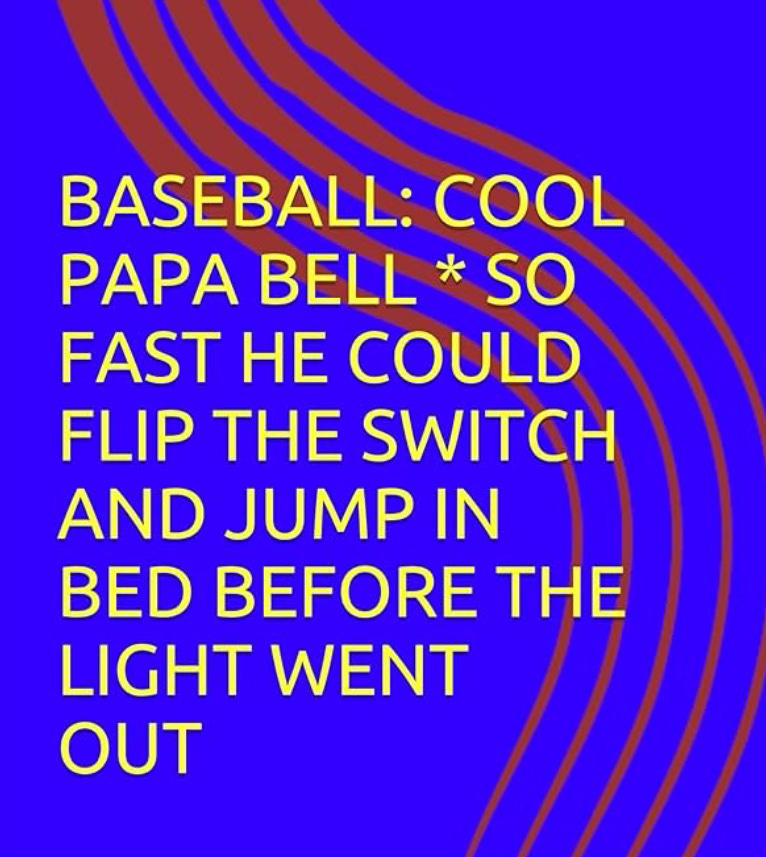
Cool Papa Bell?!?! In addtion to that badass nickname, one of the greatest baseball anecdotes ever is attributed to his speed on the base paths….
⚾︎ ⚾︎ ⚾︎ ⚾︎ ⚾︎ ⚾︎ ⚾︎ ⚾︎ ⚾︎ ⚾︎ ⚾︎ ⚾︎ ⚾︎ ⚾︎ ⚾︎ ⚾︎
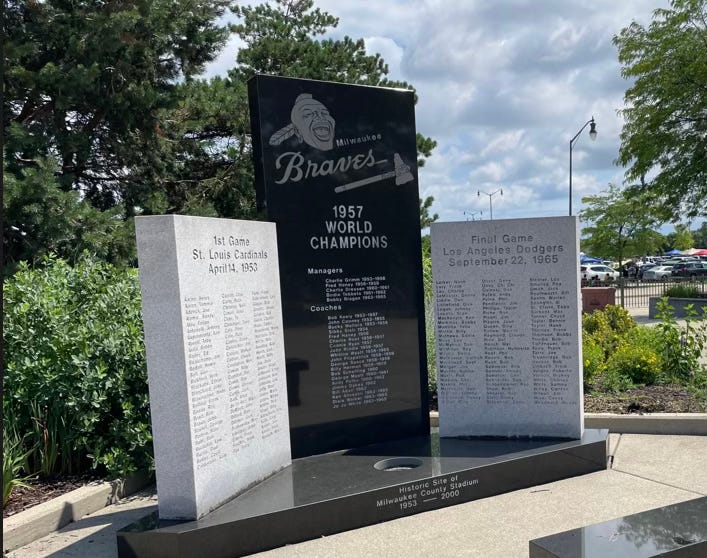
In 1950, the city of Milwaukee began construction on a bigger stadium to replace Borchert Field for the minor league Brewers. It was also built with an eye on luring a MLB franchise to the city. Milwaukee County Stadium (County Stadium to us local folk) was completed a few years later, and in 1953 the Milwaukee Braves played their first game there. The Braves came from Boston, and since MLB has a rule that no city can be home to both a MLB team and a minor-league franchise, the minor league version of the Brewers left town. (They moved to Toledo and became the Toledo Sox.)
The heel turn that Milwaukeeans played on Bostonians was short-lived lived however. After only 13 years in Milwaukee, including a World Series victory, the people of Milwaukee now had to play the roll of spurned lover, as the franchise moved again.
To Atlanta. And this relocation seems to have stuck.
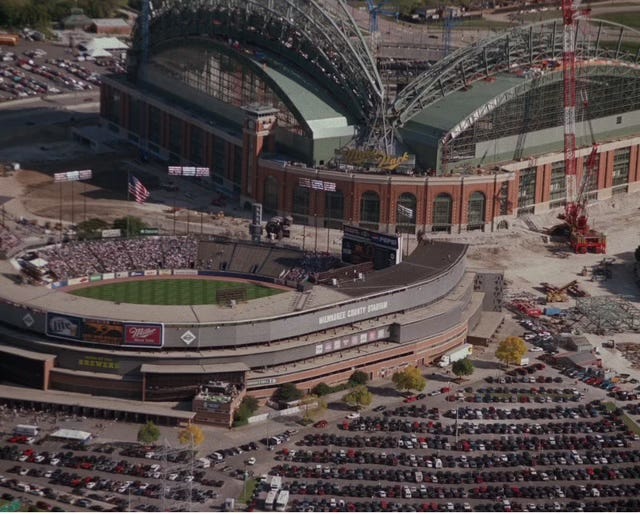
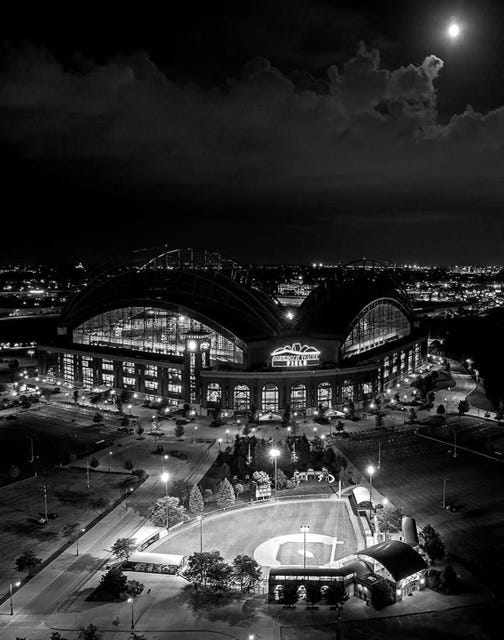
County Stadium sat mostly empty until Bud Selig was able to procure the rights to the fledgling Seattle Pilots franchise, bring them to Milwaukee, and rename them the Brewers in time for the 1970 MLB season. The Brewers (and Packers from time to time) played there until the opening of Miller Park in 2001. (A few years ago they changed the name of Miller Park to American Family Field, but we Wisconsinites refuse to call it that.)
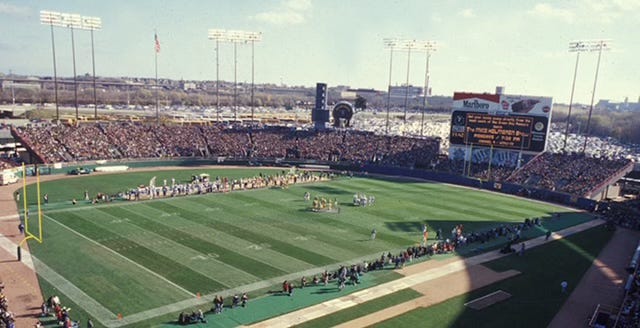
And if that scoreboard and those outfield bleachers look familiar, well you just may remember them from the greatest baseball movie of all time…
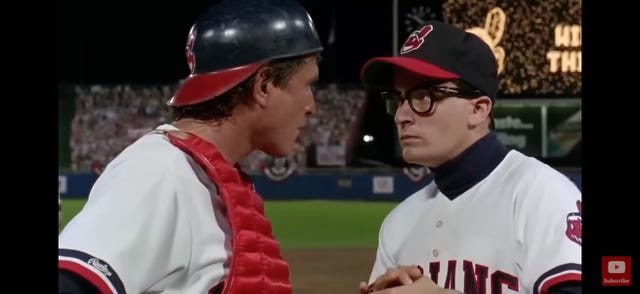
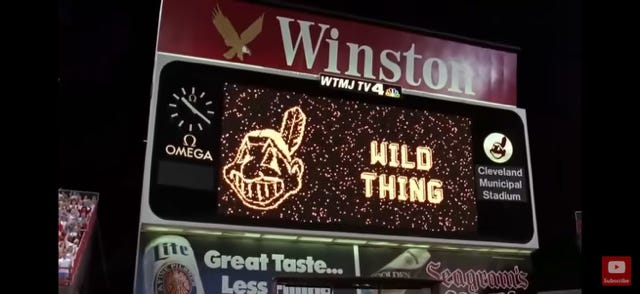
Miller Park is a great place to watch a game. As you may know, my dad and I have been to all but 5 MLB parks at this point. I would definitely put Miller Park in the Top 10. Good food, great fans, retractable roof, acceptable parking, and top notch tailgating.
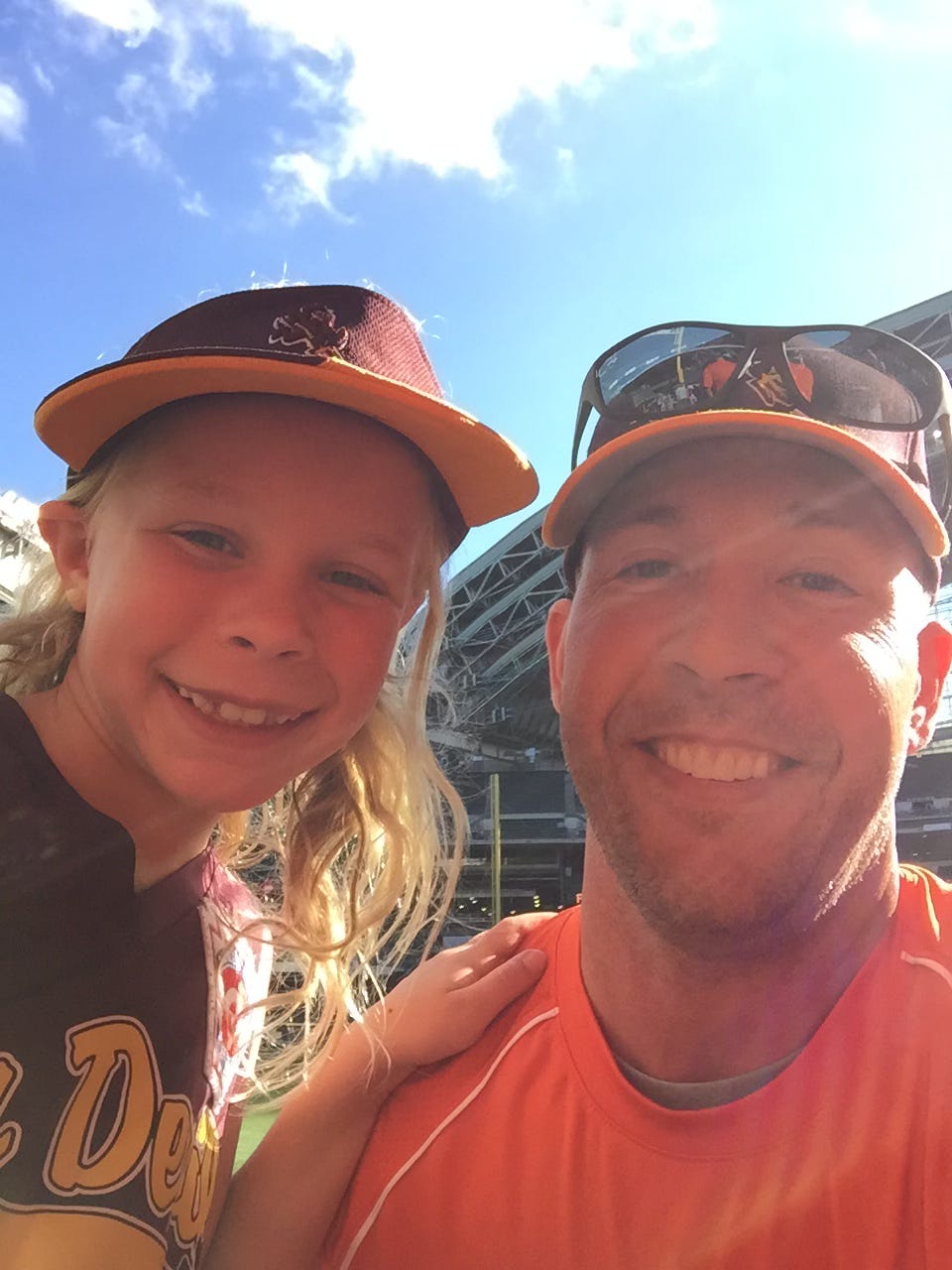
When County Stadium was eventually demolished, the Brewers built a full-scale ballpark named Helfaer Field for kids in its place. Every year hundreds of children in the area get to play baseball and softball there. It is really cool.
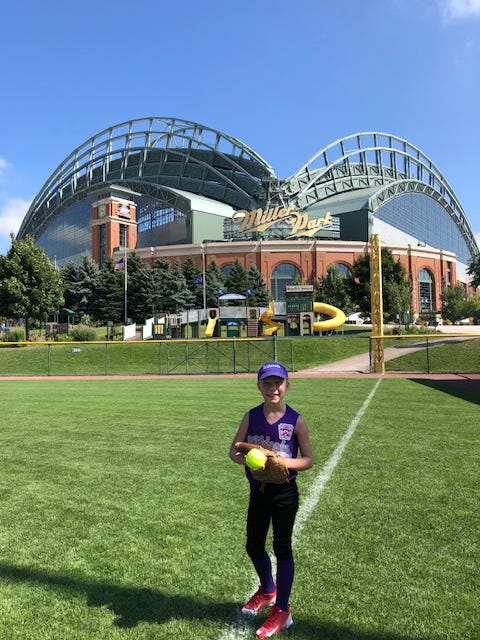
A couple of interesting tidbits about Helfaer Field are that the foul poles are the original ones from County Stadium, and the original home plate location of old County Stadium is memorialized inside.
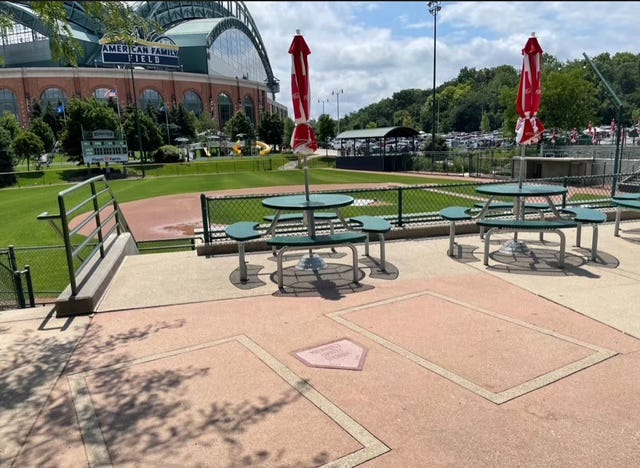
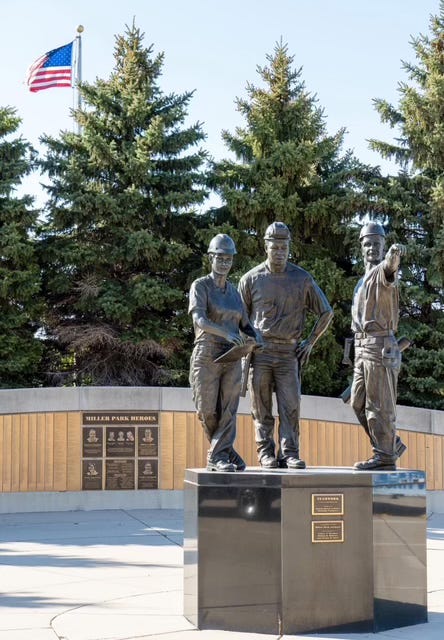
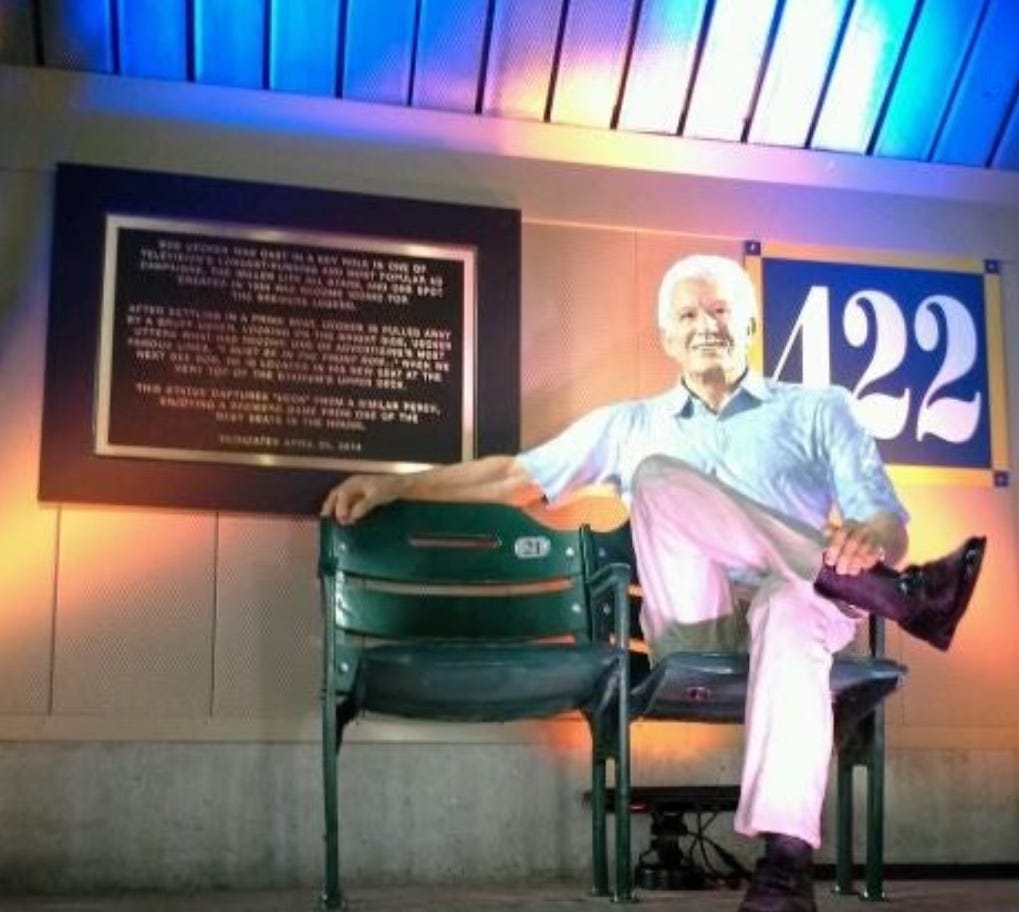
Historical plaques, markers, and statues abound at Miller Park, so I can’t include them all. Here are just a couple…
Are any of you as big a fan of historical markers as I am? Let me know in the comments!
🦗 🦗 🦗🦗 🦗 🦗🦗 🦗 🦗🦗 🦗
I am a huge fan of historical markers! As a history teacher, I thought it was my duty. Statues, too. I know little about Milwaukee history, but I’m old enough to remember the move of the Seattle Pilots. Cool story.
Recently caught myself in a rabbit hole of Milwaukee history. Stumbled on Borchert Field. My Favorite thing about old ballparks like this is the Dimensions. They’re always so funky. Dimensions aren’t fully known but estimated to be about 270ft down each foul line, outfield gaps 435ft and centerfield 392ft. Apparently it resembled the polo grounds. Anyway this was a good read to get me through this slow Friday workday.