


QUICK HITTERS:
Laptop update: My new one has arrived 😂. Shout-out to all of you that called that one. If you are a new subscriber you can read about The Laptop Bonanza here.
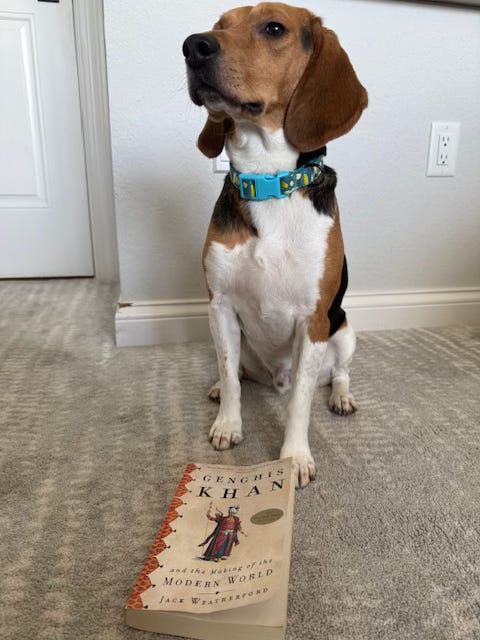
This week’s book recommendation is the inspiration for the piece below in GOING DEEP. Genghis Khan, and the Making of the Modern World by Jack Weatherford is a thoroughly researched and totally gripping account of the rise of a nobody to become the most feared and powerful man on the planet. Whatever preconceptions you may have of the Mongols (if you have any at all) will be wiped away by this amazing book.
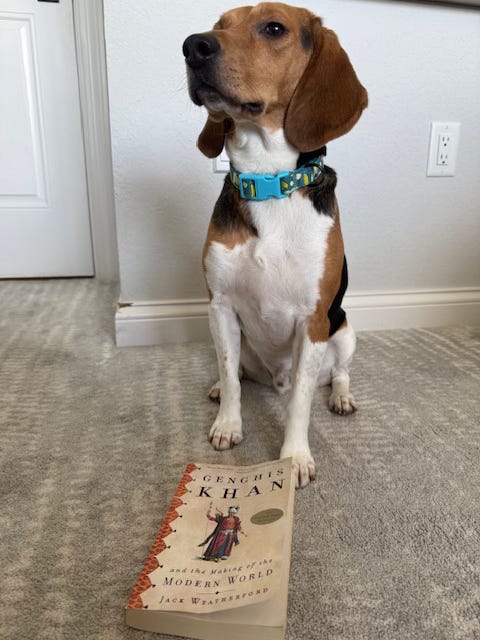
I call this one “Beagle Side Eye.” We anticipate Maverick’s portrait being hung in the Louvre any day now. Loved this video I saw the other day of Māori political leaders in New Zealand doing the Haka to protest a proposed new law aimed at stripping some of their power. I thought it was timely in that we’ve recently spent time talking about Captain Cook’s adventures…which included New Zealand and the Māori. (SilentPunt subscribers John & Bonnie just spent time there!)
4. Earlier this week on the SilentPunt Podcast Travis & I did a deep dive on NATO and nuclear war (here). Ok, maybe not deep but as deep as two guys with early onset CTE can go. In OVERTIME we were a little more low brow. We talk about what our teenage children do to annoy us:Intercourse, PA is right down the road from this week’s sponsor. This is not a joke.
No poll this week. On next week’s podcast we’ll break down the available QBs in this year’s NFL draft. Including a recap of the past few years worth of 1st round QBs.
1st Reminder: If you’d like to listen to this post in your car or on a walk or while pillaging a neighboring village you can do so by clicking the small ‘play’ icon on the top right hand side of your screen (at Substack.com or in the Substack app).
2nd Reminder: SilentPunt works on referrals, not commission, so please invite your best friend:
GOING DEEP:
The Wrath of Khan, Genghis That Is: What we can learn from a forsaken boy that grew to become one of the most dynamic leaders the world has ever seen.
The first movie I remember going to was Star Trek II, The Wrath of Khan. I was 7 years old and aside from being mesmerized by Ricardo Montalban’s pecs the thing I remember most was my lifelong love of movie theater popcorn being born.

The plot of the movie is in essence one of revenge and rebirth1. Genghis Khan's life, which ended in the year 1227, followed a similar arc. If you are like me, your knowledge of the Mongol warrior is limited to knowing he killed a lot of people and sired a lot of children. In fact, Genhgis procreated so much during his time on Earth that an estimated .5% of the world’s current male population is descended from him. That may not sound like a lot but what if I told you that number equates to 35 million men? Not total men ever…men alive right now.
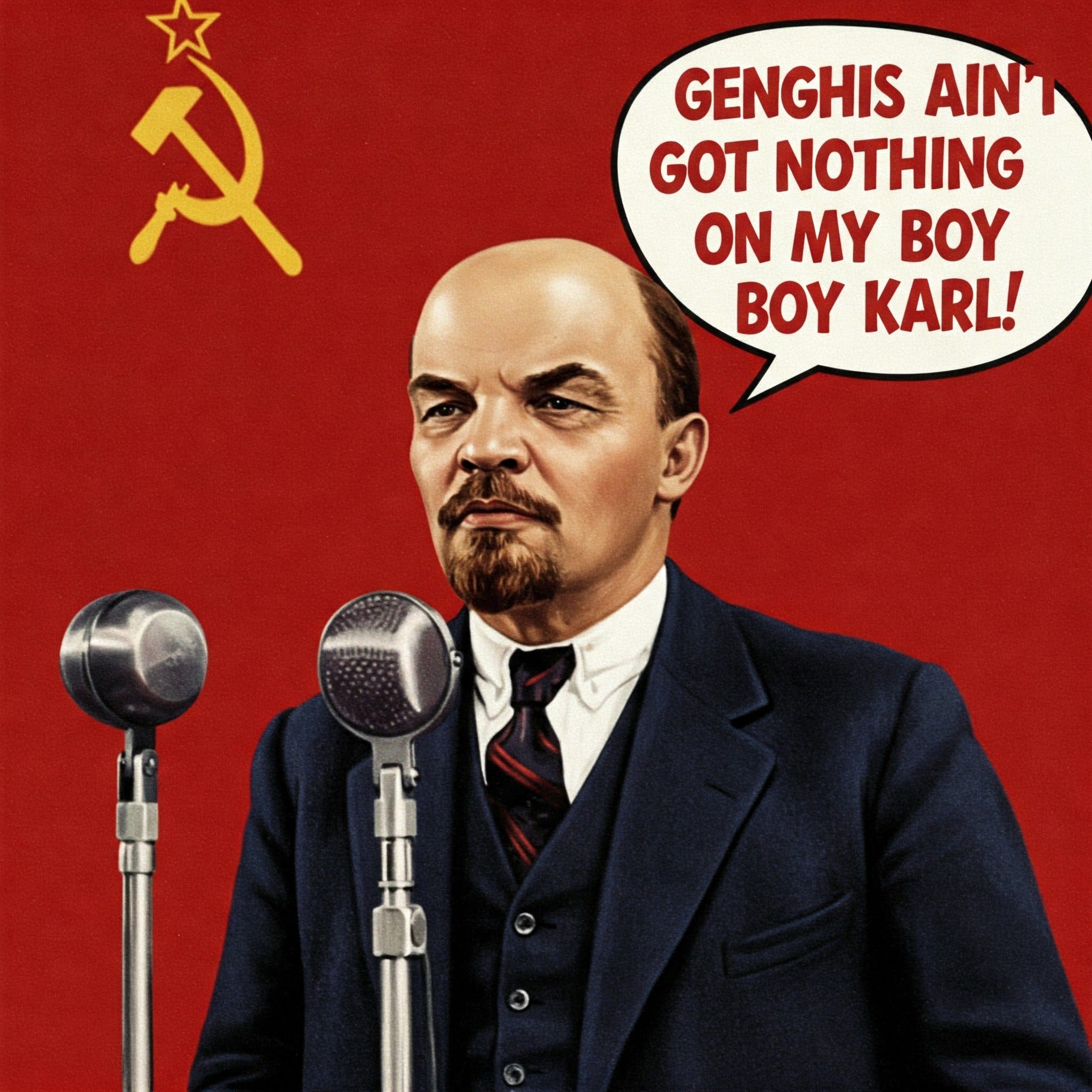
In the 800 years since his death the world’s perception of his effect on it has slowly evolved into one of plunder and murder. Today the words ‘mongol’ and ‘mongoloid’ are considered pejorative2. The “Mongol Hordes” are thought of more as a pestilence than what they actually were: the second largest empire in the history of the world. At one point covering roughly 20% of the planet, the last vestige of the Mongol empire wasn’t extinguished until 1920. Damn those pesky Russians and their Marxist revolution.
Genghis Khan’s early life was one of kidnapping, rape, murder, and running away from such things. At the time the Mongols were a disparate group of unaffiliated nomadic tribes. Similar to the unification of many Islamic states by Saladin during roughly the same time period, Genghis used the lessons he learned as a youngster to bring a people scattered over a vast plot of land together. Captain James T. Kirk and his United Federation of Planets would’ve approved.
While Genghis lived almost a thousand years ago, and is most known for the exploits I’ve just outlined, in reality his rise and the rise of the Mongol nation was much more egalitarian than many understand. Ok, egalitarian may be a stretch but many of the laws and institutions he created were indeed revolutionary. Here is a brief overview of some of the biggest:
Personal (property, sex, and food)
Before Genghis’s rise to power kidnapping was vital to Mongolian culture. When one group of Mongols attacked and conquered another the victor killed all of the adult men in the vanquished group and kidnapped the remainder to become slaves to their group. Many of the women and young girls would be taken as wives.
When Genghis took control of the Mongols he made it so that anyone who was conquered would be absorbed into the group. This assimilation was a massive innovation3. Once absorbed into the group these people received all rights and privileges that any Mongol would receive. Except the conquered men.
The Mongols still killed all of them.
He outlawed adultery. Like many laws of a religious or political group this had real world applications. Much infighting in the Mongol culture was due to married men and women having sexual relations with other married men and women. This is what was defined as adultery to a Mongol. If you were married you could essentially have sex with any other mongol so long as they weren’t married.
Rights to hunt certain areas and specific animals were outlined and the stealing of animals was prohibited. This was a big change for a culture that was predicated on raiding other groups for such things. All of this was to ensure that there was managed access to food. No one could horde food, and no one would starve.
Religious
One thing that was true of the Mongols before the rise of Genghis was that the area they covered was so expansive that it touched other areas with vastly different religions. So much so that their culture was made up of Christians, Muslims, Buddhists, and spirit based religions (similar to how the Native Americans worshiped).
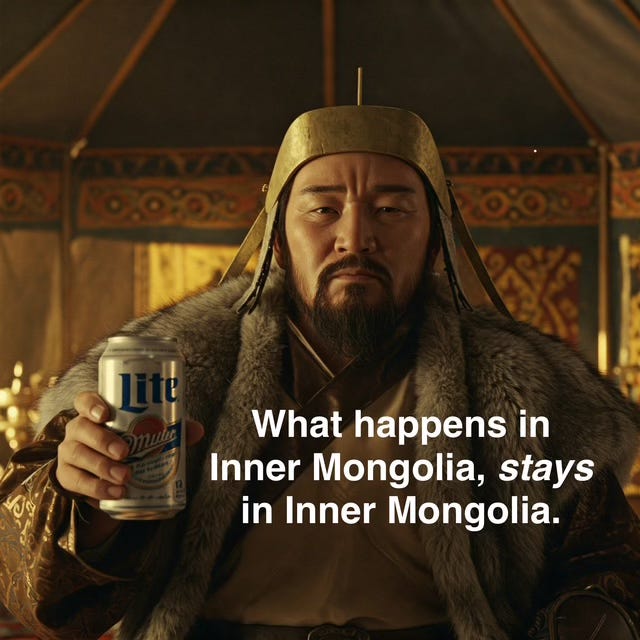
Being that Ghengis was born in the innermost region of Mongolia (and thus did not come into contact with the religions of neighboring lands) he was raised to worship the spirits. He eventually came to understand that just like relationships and property, religion was one of the things people were most apt to kill each other over. Therefore, he mandated complete and total religious freedom throughout the empire. For a warring culture that was trying to expand its reach this was transformational philosophy. It was especially impressive given what Christianity and Islam were doing during the same time period.
Like the US now, all things affiliated with religion were tax exempt for the Mongols. However, they took it a step further. Any vocation that was essential for the common good did not need to pay taxes. Again, this was an innovation that reflected his forward thinking. Genghis did not want his subjects to enrich him….he wanted them to enrich one another.
Political
Genghis instituted group and familial responsibility for any crime. If your son or daughter, aunt or uncle, or third cousin and his wife committed a crime the entire group was held accountable. This included small crimes as well as crimes where the punishment was death. This law strengthened family bonds and encouraged every group to be keenly aware of the behavior of everyone within their camp.

All leaders were subject to the same laws as the common people. This was another revolutionary idea for its time. Kings and Sultans could do as they pleased during this era of history. Genghis realized that the more his citizens trusted him, the more they trusted the system.
The Khan had to be elected. Similar to George Washington, Genghis did not seek eternal power for himself or his progeny. He believed that a hierarchy dictated by familial ties, and not based on merit, was destined to fail.
Unfortunately for the Mongols the system put in place by Genghis Khan only held for about fifty years after his death. And as history has continued to teach us, legacy leadership is a recipe for disaster.


The last unique strength that Genghis, and the entire Mongol nation, exhibited was the ability to incorporate foreign ideas and technologies into their own culture. In general, Mongols did not do things like build permanent structures, smelt iron, or create a written language. But when they conquered a people they took the best from that culture and made it their own.
While all of these advancements fundamentally changed empire at the time, we take many of them for granted today. The combination of assimilating different cultures, tolerating the differences of others, and taking responsibility for your actions have been bedrock principles in America since our founding.
How do you think we’re doing with these today?
Please leave your thoughts in the comments, all opinions are welcome.
Remember the Genesis device?
Most people over the age of 50 can probably remember people with Down’s Syndrome being referred to as Mongoloid. Some background on why that was can be found here.
And as we learned from the Borg, resistance is futile.
This was a particularly informative and funny edition! I love the diversity of your topics. Oh, and when you do your quarterback issue, don't forget to expound on the reigning MVP. This is a particularly good era for QBs.
Wow! Genghis Khan was quite an imposing figure - kinda’ makes you wonder why there aren’t more young men named Genghis. I don’t think it even cracks the top ten in baby names.