


I recently started helping out as an assistant football coach at my daughter’s high school, which is its own essay entirely and possibly several future apologies to my family. But being back around a team, even in a much smaller role, has reminded me of something I had somehow forgotten: football labels people faster than almost any environment on earth.
Within about five minutes, everyone starts becoming a type. There is the tough kid, the soft kid, the grinder, the head case, the leader, and the problem child. There is the kid with a great motor, the kid with bad body language, the locker-room guy, the cancer, and the coach’s son. Not that kind of coach’s son, the other kind.
The kind who somehow knows the playbook and also needs to be told not to throw his helmet into a water cooler.
The labels are not always wrong, which is what makes them dangerous. Sometimes the tough kid really is tough, the problem child really has made three grown men stand in a hallway with their hands on their hips, and the kid with bad body language really does look like organized football was invented specifically to inconvenience him.
Most labels begin with evidence, but a label can be accurate and still incomplete, and incomplete is where people usually get interesting.
Coaches use labels because coaches have to survive. You’re sorting through teenage bodies being ravaged by more testosterone than Jose Canseco at a Limp Bizkit concert. A label gets you through the day and gives shape to the chaos. It lets a staff talk quickly about a hundred different people without turning every meeting into a Dostoevsky novel fueled by Diet Coke and sunflower seeds.

The danger comes later, when the label stops being a note and starts becoming a verdict. That’s when the word begins doing more work than it’s earned.
Sometimes the lazy kid is overwhelmed. Maybe the tough kid is terrified. What if the selfish kid is trying to survive something nobody else can see? And how about the natural leader who is not leading as much as performing leadership, because everyone decided he was that guy before he had the courage to tell them he wasn’t?
That, I think, is the part we miss. The label itself is not the sin. We all use labels because the world is too large and too complicated to see every person as a blank page every time they walk into the room. Coaches, parents, teachers, bosses, fans…we all use them, often on ourselves first. The problem is when the label becomes a substitute for curiosity.
That’s when “lazy” means we stop asking why. When the label is “tough,” we stop wondering what it costs. And once we decide he is a “problem,” we stop asking what the problem is trying to tell us.
The longer I coached, the more I realized players were not the only ones being reduced that way. Coaches were too. A head coach is not famous in any real sense, especially not at the small-college level. Nobody is following you through an airport. Nobody is pretending not to notice you at a steakhouse. There are no photographers hiding in the shrubbery outside the Division III coaches’ office, unless recruiting has gotten significantly more aggressive since I left.
But it’s still a public-facing job, and public-facing jobs have a way of turning a person into whatever someone else needs him to be. Players see you through playing time. Parents see you through their sons. Administrators see you through wins, complaints, graduation rates, and whether the offensive line coach said something unfortunate near a buffet.
Alumni see you through whatever the program was when they were young, invincible, and apparently running a 4.6.
To some people, you are the guy who changed their kid’s life. To others, you are the idiot standing between their kid and greatness. Sometimes, in my experience, you can be both of those things to the same family.
I once coached two brothers from the same family, a few years apart, and they gave their father two completely different versions of me. The older son had the kind of experience every coach wants a player to have. He fit, he worked, he grew, and his father saw our program as part of the reason. To him, I was the right coach in the right place at the right time.
Then the younger son came along, and it was different almost from the beginning. He was not the same player or the same worker, and for whatever mistakes I made, I could never quite reach him. Eventually, he quit. Somewhere in there, his father’s view of me changed almost completely. Maybe he had fair reasons. I’m sure I gave him a few.
But I had not become an entirely different person. I had the same temperament, same whistle, and probably the same oversized polo. His angle on me had shifted, and once it did, the story changed with it.
That doesn’t make the father evil. It makes him human, which is more uncomfortable because it means I can’t dismiss him as an outlier. I’ve done the same thing, and so have you. We meet people through the part of them that affects us most directly, then we confuse that part for the whole.
The coach becomes my son’s playing time. The teacher becomes my daughter’s grade. The boss becomes the reason my life is harder. Once that happens, curiosity has to fight uphill because the label has already done the work for us.
This is where sports can teach us something, even while it’s busy teaching us that the prevent defense mostly just prevents joy. Football gives us labels because football needs labels, but the scouting report is not the person. It’s the first attempt at understanding the person, and the first attempt is almost never the final truth.
If that can happen to a small-college football coach, imagine what happens when the person being labeled is famous. Most of us get the mercy of being forgotten. We change jobs, move towns, lose weight, gain weight, start therapy, buy reading glasses…become the kind of person who says “I’m not downloading an app to buy a sandwich,” and eventually the old label loosens.
Famous people don’t usually get that luxury. Their first label gets archived, replayed, mocked, and sometimes turned into a costume. Sports are especially good at this because sports have no patience for a complicated interior life. There’s a scoreboard, a highlight package, and a studio show that has to get to the truck commercial before the next game kicks off.
A full person gets edited into something portable; not always false, and often not false at all, but small enough to say quickly and repeat forever. After a while, the shorthand stops feeling like shorthand and starts feeling like the whole story.
This is part of what has pulled me toward John Matuszak, because he is almost too easy to label. He can be introduced as the former No. 1 overall pick who became a Raider wild man, a two-time Super Bowl champion, and, somehow, Sloth from The Goonies. He’s the kind of person whose life can be made to sound like a triumph, a joke, or a warning…depending on who is doing the remembering.
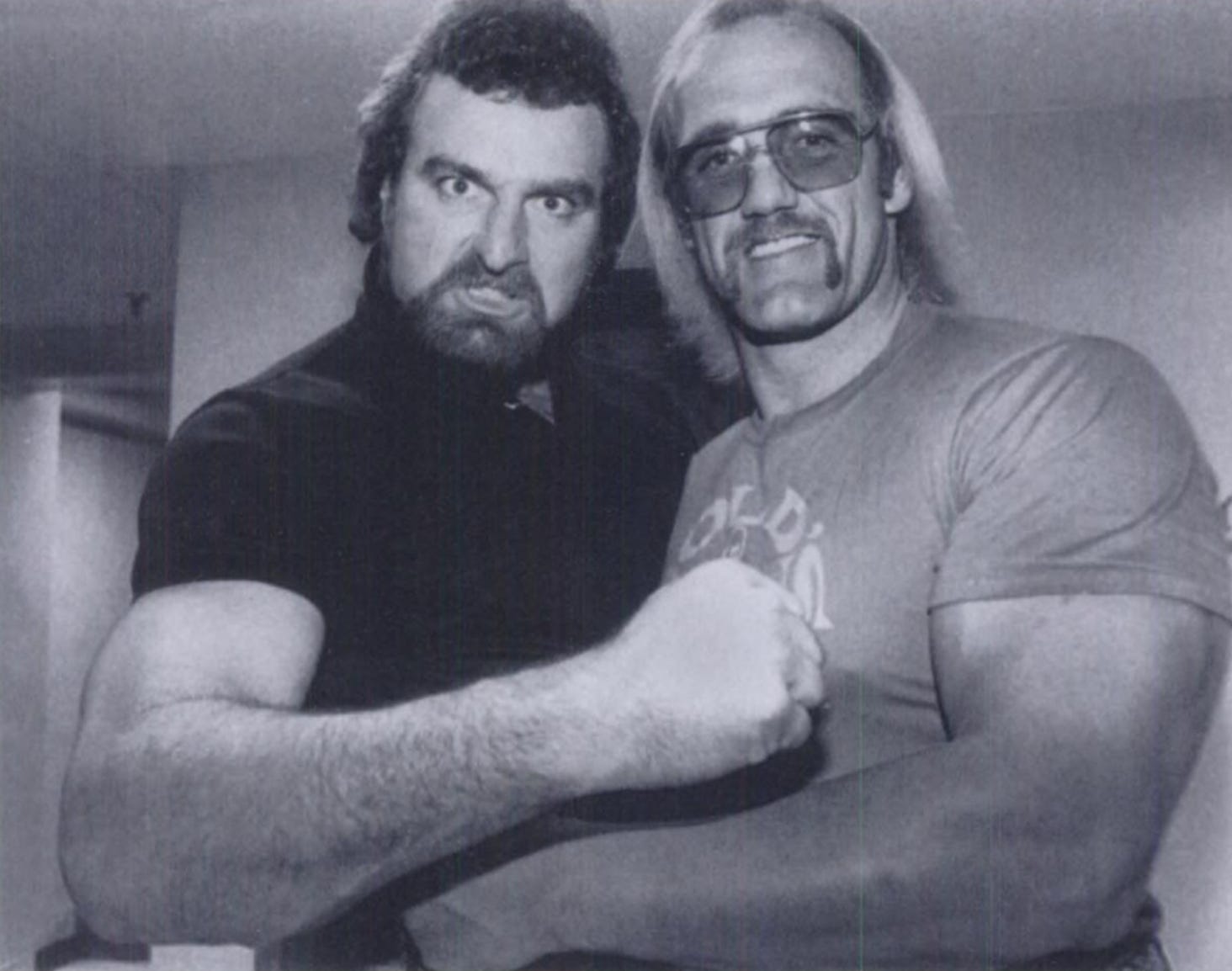
None of those labels are completely wrong, which is what makes them durable. But none of them are enough. The more I’ve researched him, the less interested I’ve become in proving the labels false, because that would be too easy and probably dishonest. The more interesting question is how many different truths had to pile up before one man became that easy to summarize.
I recognized something in him before I fully understood it. Not because our lives had much in common on the surface; he was a famous, enormous, two-time Super Bowl champion…and I once made a living yelling at 18-to-22-year-olds about pad level. My own life has been slightly less cinematic, unless someone wants to greenlight a very tense independent film about Division III recruiting and ballpoint pen thievery.
But I understood something in the search. I understood the feeling of wanting to be accepted without having to keep auditioning for it. I understood wanting someone to see past the useful version of me, the funny version, the tough version, the coach version - whatever version I’d built because it got me through the day - and still choose to stay.
I was lucky. I found that kind of acceptance in marriage. It didn’t fix everything, because marriage isn’t a spa treatment for the soul, and anyone who says otherwise has never argued over the proper way to load a dishwasher.
But it gave me something I had spent a long time needing. It gave me a place where I didn’t have to perform quite so hard, and once I became more comfortable in my own skin, I became more curious. About other people, yes, but maybe more importantly, about myself.
That may be the real thing labels steal from us: not just curiosity about other people, but curiosity about the names we have learned to answer to. Given enough time, a label can become so familiar that it starts to feel like a fact.
We all use labels because we have to. There are too many people, too many stories, too many moving parts, and too many practices where somebody forgot his cleats despite somehow owning fourteen pairs of slides.
We need shortcuts. But every once in a while, it’s worth asking whether the shortcut has become the whole map. Because a label can tell us where the story starts.
But curiosity?
Curiosity is what keeps it from ending there.
QUESTION FOR THE COMMENTS:
What’s a label someone put on you that was partly true, but incomplete? And what did it miss?
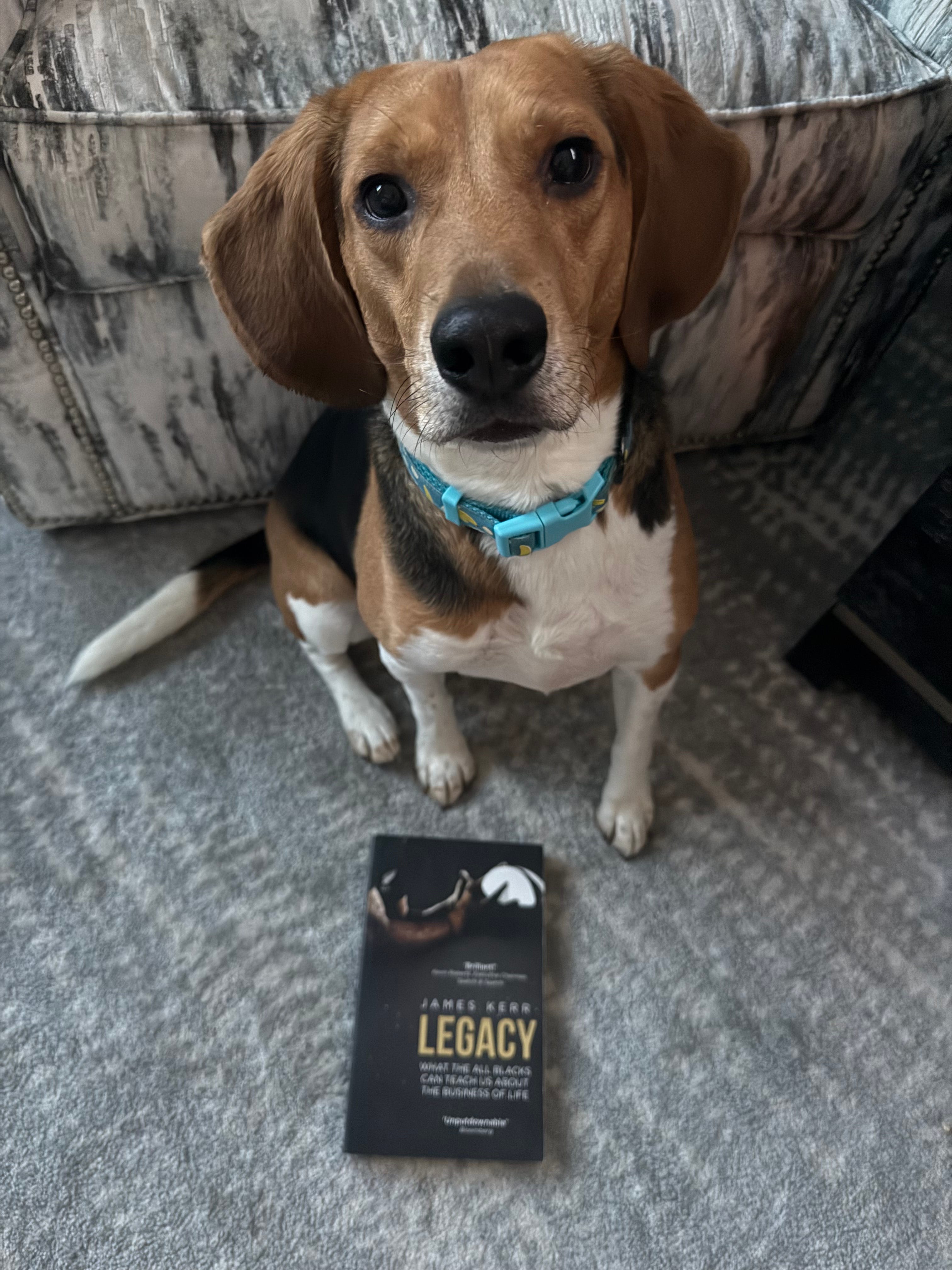
This week’s recommendation: Legacy by James Kerr.
As longtime readers know, I generally hate self-help books, mostly because too many of them feel like a LinkedIn post that got into CrossFit1. But Legacy is different. It’s technically about the New Zealand All Blacks, but really it’s about humility, standards, culture, and what a team owes to the people who came before and after it.
It pairs well with this week’s piece because it asks a better question than most leadership books: not “How do I become impressive?” but “What kind of person does this place produce?” Which is less fun to put on a conference lanyard, but probably more useful.
Full disclosure, I do none of that shit.
I already told you I loved the title. Now I'm telling you I loved the essay. It's really smart and insightful, and I have to go now 'cause I'm gonna restack it.
This is such a thoughtful post, Henny. You're so right about labels. We all tend to use them--which also means most of us suffer from being labeled ourselves. I love the closing lines that lead you to curiosity. Really looking forward to seeing where your own inquisitiveness takes you with your biography of John Matuszak! Again, fantastic read!!